Why This Feels Like a Turning Point, Because It Is
It is easy to feel that the world has become unusually turbulent. Institutions that once seemed permanent are questioned. Political divisions run deep. Trust in shared authority has thinned. There is a widespread sense that the old order is breaking down and something new is struggling to be born. That feeling is not an illusion, and it is not unprecedented. It is, according to the generational framework developed by Neil Howe and William Strauss, roughly on schedule.
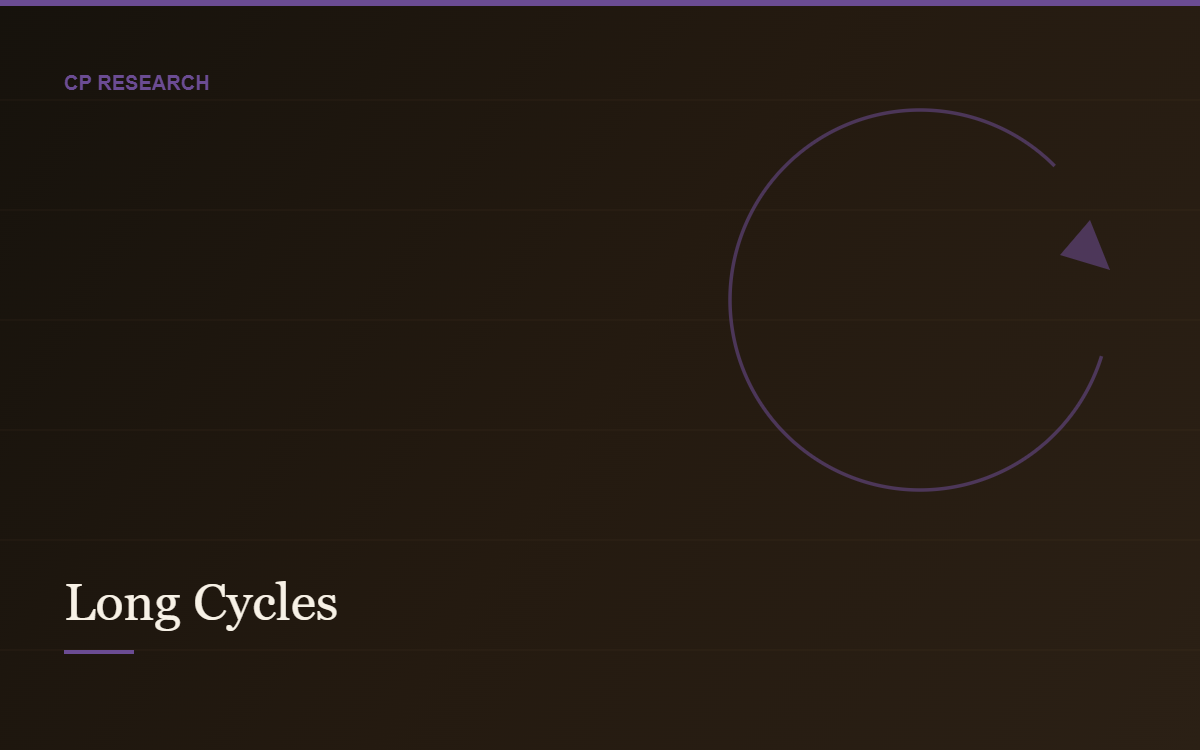
The framework observes that modern history moves through recurring cycles of about eighty to a hundred years, the length of a long human life. Each cycle passes through four seasons, called turnings. A High, when institutions are strong and confidence is rising. An Awakening, when individuals push back against those institutions. An Unraveling, when institutions weaken and cynicism grows. And finally a Crisis, a Fourth Turning, when the old civic order is torn down and rebuilt under enormous pressure.
The engine behind this is generational. Each generation grows up in a different season and develops a different character in response. As generations age into positions of power, their collective temperament reshapes the mood of society. The rebellious young of an Awakening become the elders of a Crisis. The cycle turns not because history is mystical, but because the human beings living it change as the previous era recedes from memory.
We appear to be inside a Fourth Turning, a Crisis era. The framework does not predict specific events, and it should not be treated as prophecy. What it offers is a lens. Periods like this historically feature the breakdown of old institutions, intense conflict over what replaces them, monetary and fiscal upheaval, and eventually the construction of a new order that defines the decades that follow. The Great Depression and the Second World War formed the last such Crisis. The one before produced the American Civil War.
For an investor, the value of this lens is not timing trades. It is calibrating expectations. In a Crisis era, the assumption that institutions are stable and that the recent past is a good guide to the near future becomes dangerous. Government finances get stretched to their limits. Monetary systems get remade. Volatility in politics feeds volatility in markets. Understanding that you are living through a turning, rather than a passing storm, is itself a form of positioning. It tells you to expect regime change, not a return to normal.
The free notes give you the framework. The Members Desk gives you the current readings: the live Desk Status dashboard, the Portfolio Diagnostic tool, and the premium deep dives. complimentary for the first 50 members.